A new study has confirmed that Australia’s groundbreaking initiative to reduce preterm and early term births is achieving strong results — with a significant drop in potentially harmful early births and better pregnancy outcomes for women nationwide.
Published in The Lancet Obstetrics, Gynaecology & Women’s Health, the research reports detailed outcomes from the six-year national program, which first began in mid-2018.
Findings from the Lancet paper have shown that:
- From 2018-2021, through activities of the Australian Preterm Birth Prevention Alliance, the rate of preterm birth (birth before 37 weeks) was reduced by approximately 10%.
- From 2021-2024, through the expansion of Round 1 the Every Week Counts National Preterm Birth Prevention Program, a significant reduction was achieved in the early term ages (37-39 weeks – a period associated with increased risks of learning and behavioural problems).
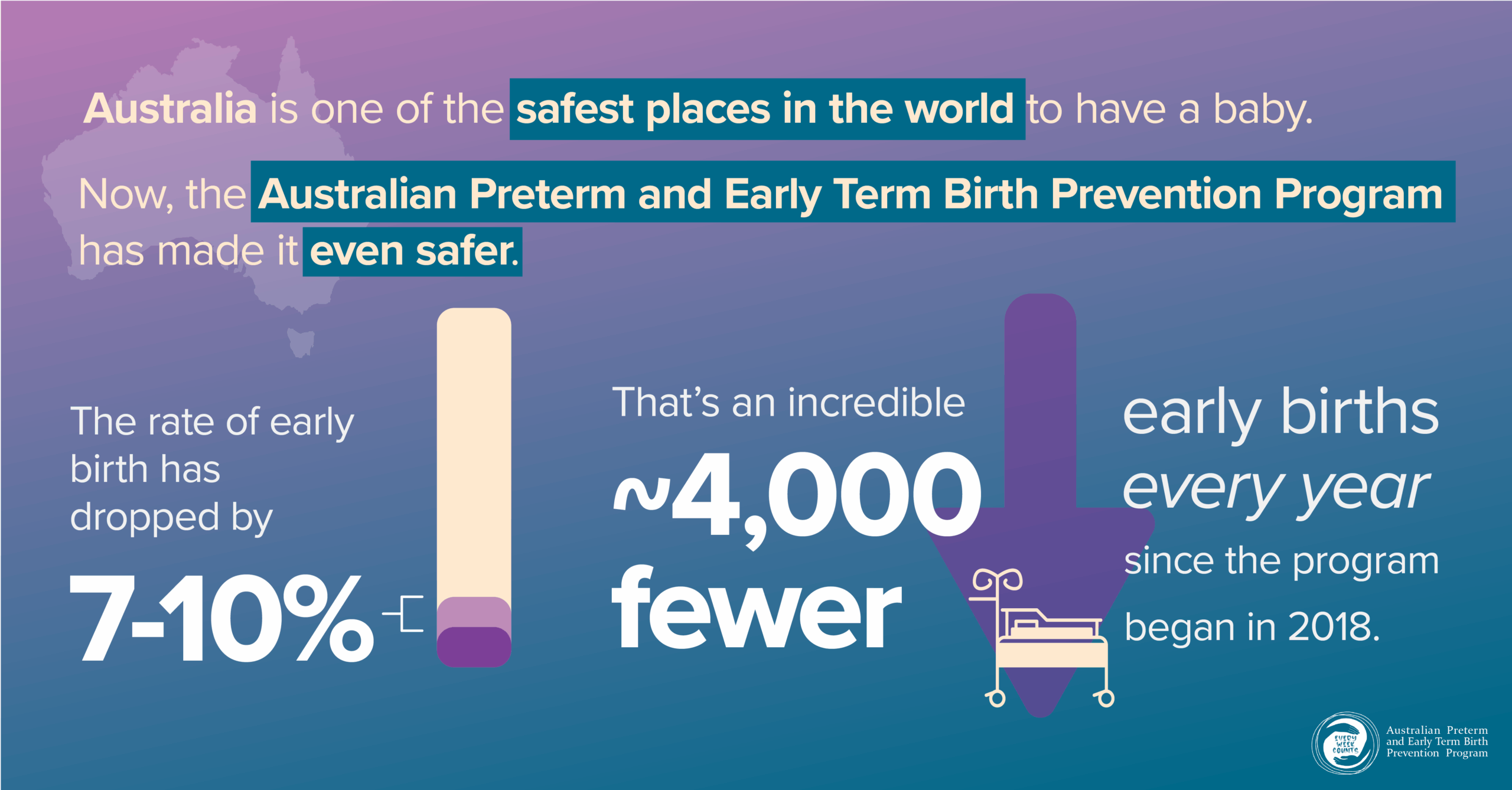
Overall, Australia’s national preterm birth prevention program has shown that using current knowledge we can lower the rate of harmful early birth by 7-10%.
The real face of this reduction is an approximate 4000 fewer cases of early birth each year across Australia since the program was launched.
Caring for preterm infants is extremely expensive, and the socioeconomic impact is immense. A 2020 cost analysis revealed the annual cost of untimely early birth to the Australian Government is $1.4 billion each year with more than $350 million of this spend on those needing education assistance due to their early birth.
In March 2025, the Commonwealth Department of Health, Disability and Ageing announced new funding to expand Australia’s world-first national program to safely reduce rates of preterm and early term birth with a focus on improving pregnancy outcomes for First Nations mothers.
To support health services to adopt and spread evidence-based practice as part of Round 2 the Every Week Counts National Preterm Birth Prevention Program, Women’s Healthcare Australasia (WHA) have partnered with the Australian Preterm Birth Prevention Alliance and the Institute for Healthcare Improvement (IHI).